
From the Field: Research and Monitoring Updates Across the Bay Islands
Updated: Jul 30
Our Research and Monitoring team has had a busy first half of the year, and we wanted to share what has been happening out on the water and along the coastlines of Roatan and Guanaja. From lobster and conch surveys to water quality testing and a full day dedicated to migratory birds, every one of these efforts adds another piece to the puzzle of understanding and protecting the Bay Islands National Marine Park.
Lobster and Conch Results in Roatan
On June 26th, our chapter directors and technical staff sat down with representatives from the Coral Reef Alliance to go over the numbers coming out of our conch and lobster population monitoring campaigns.


It was less a formal presentation and more a working session. The group reviewed the trends showing up in the data, worked through some questions together, and talked openly about a few inconsistencies that had shown up in earlier reports. The goal was simple: make sure everyone is reading the information the same way and use that shared understanding to sharpen how we monitor going forward. Right now, one of the two campaigns has wrapped up, and the second is in its final stretch.
Marine Water Quality Monitoring
Roatan

As part of our ongoing water quality work, we ran two rounds of marine water quality surveys in the Bay Islands National Marine Park this spring, one on May 6 and another on June 26th. Each survey combined bacteriological sampling with physicochemical measurements, all following BICA's own Marine Water Quality Monitoring Protocol alongside recognized national and international methods. In total, the team covered 30 bacteriological sites and 43 physicochemical sites, and we even added a new sampling location to expand our coverage.
Bacteriological samples were brought back to BICA's laboratory to check for contamination indicators, while the physicochemical readings were taken right there in the field using our specialized equipment. Put together, this work gives us solid, reliable data to track how water quality is changing over time and to keep strengthening how we manage and protect these marine ecosystems.
Guanaja
Guanaja had its own version of this effort during the first half of the year. Our team visited 10 sites scattered around the island, collecting two water samples at each one for bacteriological testing. Those samples made their way to the BICA laboratory, where they were analyzed to help us understand water quality and, ultimately, protect both human health and the marine environment.
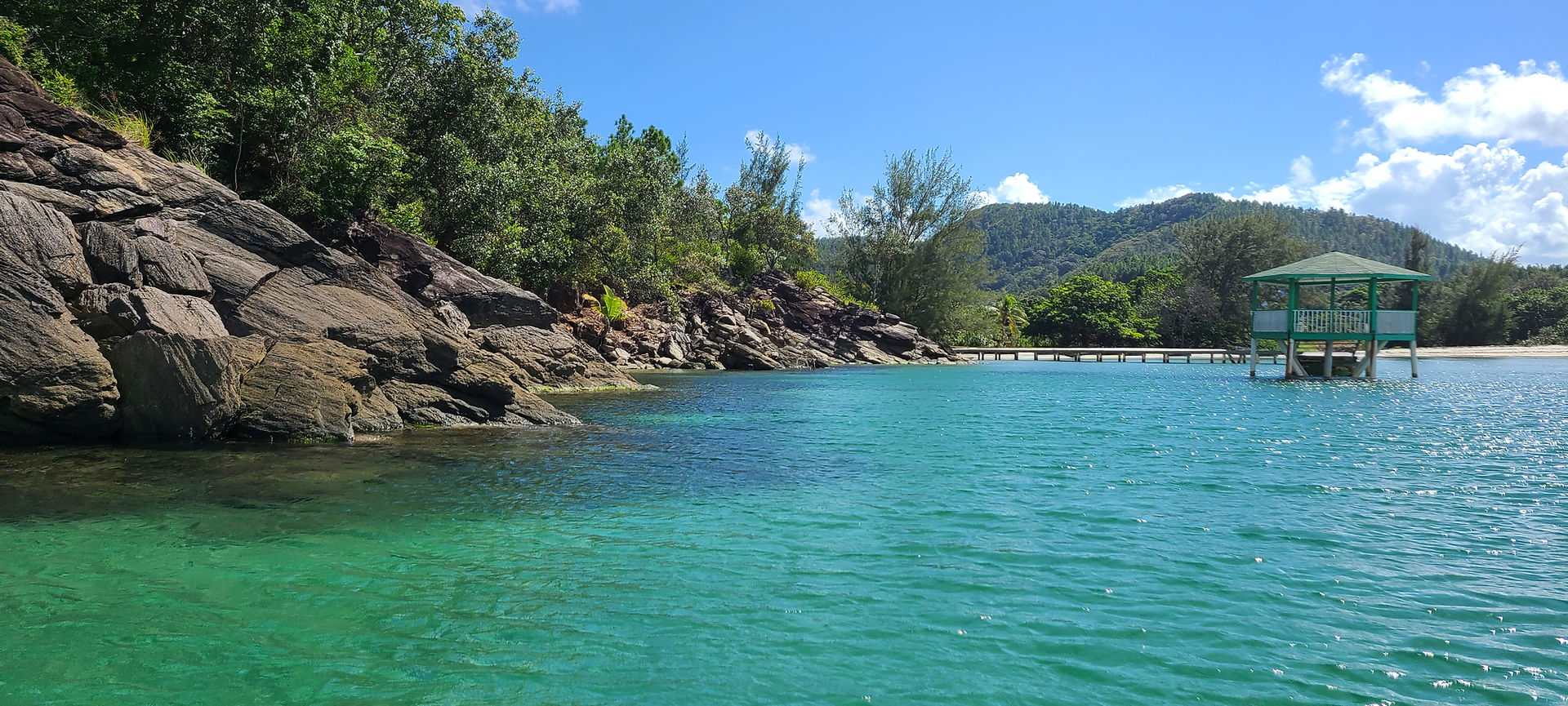


Alongside the sampling, the team also measured physicochemical parameters on site, including temperature, pH, conductivity, dissolved oxygen, salinity, total dissolved solids, chlorophyll, and water clarity. Together these numbers paint a picture of what is happening beneath the surface and help flag any changes before they become bigger problems.
This work fits into a larger push by BICA to build up applied research and generate the kind of reliable scientific information that decision makers actually need, especially when it comes to protecting coral reefs, seagrass beds, and coastal areas across the marine park.
World Migratory Bird Day in Roatan
May 9 brought a different kind of monitoring day: World Migratory Bird Day. Teams headed out across the Bay Islands for a full day of bird observation, and by the end of it, they had recorded 53 species and 583 individual birds across two islands, spanning mangroves, coastlines, forests, and even community areas.


Photo Credits: Alejandro Garcia
In Roatan, the surveys took the team through Mangrove Bight, Sandy Bay, Calabash Bight, Port Royal National Park, and Milton Bight. Among the birds spotted were the Caribbean Dove, Reddish Egret, and White rumped Sandpiper, plus quite a few others along the way.
Every bird counted that day adds to what we know about migratory and resident populations here, and that knowledge keeps shaping how we think about conservation across the Bay Islands.
Thanks to everyone, our staff, chapter directors, and partners like the Coral Reef Alliance, who made all of this possible. There is more monitoring ahead, and we will keep you posted as the results come in.
Support our efforts!


