
Seagrass, Fishing Nets, and Snakes: What We've Been Up To in the Bay Islands
Updated: Jul 30
This trimester took us from seagrass beds to forest reserves to mangrove lagoons, working alongside communities, co-managers, and a few reptiles along the way. Here's the recap.
Seagrass: Roatan's Overlooked Guardian
If you ask most people what makes the Bay Islands National Marine Park special, they'll probably mention the reef first. Seagrass rarely gets a mention, even though it's doing some of the heaviest lifting out there. That's part of why we brought together 11 institutions on April 23rd, including national and municipal authorities, NGOs, private sector partners, and folks from the local community, for a session focused entirely on this quiet, easy to overlook ecosystem.

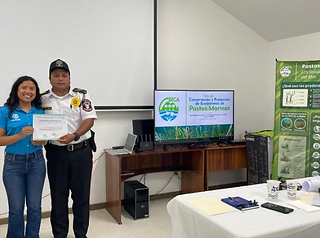
We walked through real cases of illegal seagrass removal and talked openly about what's driving it and what can be done. By the end of the session, the group had agreed on a set of joint actions: environmental education, developing materials people can actually use, putting a real value on the ecosystem services seagrass provides, and backing up patrols, inspections, and ongoing monitoring of the meadows.
We wrapped up the day on the water, aboard the Glass Bottom Tour Boat with Island Retreat Roatan, cruising through the French Cay Fisheries Recovery Zone. Seeing it in person makes a difference. Participants got to watch juvenile fish using the seagrass as a nursery, turtles and rays feeding in it, and its clear connection to the reef just beyond. It's also worth remembering these meadows are serious carbon sinks and part of the Bay Islands' Ramsar sites, so the stakes here go well beyond the local reef.
Fishing Communities and a Changing Climate
The next day, April 24th, we shifted focus to fisheries with a workshop supported by IKI (International Climate Initiative). This one centered on the Climate Resilient Fisheries Planning Tool, or CRFPT for short, a six step process built to assess how climate resilient a fishery actually is and figure out which actions matter most for a given region or community.


What made the day valuable was the mix of people in the room. Fishing groups and co-managers sat together and worked through the strengths and vulnerabilities of their own systems, not in the abstract, but based on what they actually see on the water. Out of those conversations came real discussion around solutions that could build climate resilience, support reef health, and open up new opportunities for the communities who depend on these fisheries every day.
Nine Boas Back Where They Belong

Over in Port Royal National Park, we had a good news story worth celebrating: the release of nine Boa imperator individuals back into their natural habitat. Before release, each snake went through a full check at the veterinary clinic, getting assessed, measured, and weighed to make sure it was healthy and ready to go.
The releases happened across two areas of the park, the northern zone and Calabash Bight, both chosen because they help strengthen boa populations in parts of the ecosystem where their presence really matters.


A Reminder from Forest Reserve No. 3
Forest Reserve No. 3 in Guanaja is full of life you might not notice at first glance: snakes, frogs, toads, lizards, all doing their part to keep things in balance. We get it, some of these animals look a little intimidating, and it's easy to feel uneasy around something you don't know much about. But these species matter more than people realize. They help keep insect populations in check, they're part of the food chain, and in a lot of cases, they act as a kind of early warning system for environmental health.
So here's our ask: if you come across a snake, frog, toad, or lizard out there, just leave it be. Don't kill it, don't capture it, don't move it out of its habitat. Give it space, watch from a safe distance, and let it go on its way. Most of these animals aren't looking for trouble, and they won't cause any if they're simply left alone. Protecting them is really just protecting Guanaja's natural balance, and every one of these species, no matter how small or strange looking, has a role to play.
Utila's Turtle Harbour Wildlife Refuge
Last stop, Utila. Turtle Harbour Wildlife Refuge is one of those places that quietly does a lot of work. Its mangroves, lagoons, and coastal stretches give all kinds of species somewhere to feed, breed, and take shelter. Spend some time there and you might spot migratory and resident birds, juvenile fish, iguanas, crustaceans, and other wetland dependent wildlife, alongside the sea turtles the refuge is best known for protecting.
Keeping this place healthy isn't just good for the animals that live there. It's what keeps the whole ecological picture in Utila intact, and it's a big part of why the island's wildlife has somewhere safe to call home.
That's the wrap for this update. As always, thanks to everyone, agencies, partners, communities, and volunteers, who showed up this month to make this work possible.
Support our conservations!


